

If you’ve ever sat down with a palette of paints, a set of markers, you’ve likely felt that spark of curiosity. What happens if I mix this with that? We know the basics from primary school is yellow and blue make green, red and yellow make orange and things get a lot more interesting when we start mixing secondary colours together.
One of the most common question for everyone who love to paint: What colour does green and orange make?
And the answer is to create a beautiful, earthy Olive Green or a warm, toasted Citron. But the “how” and the “why” are where the real magic happens. Let’s dive into the science and the soul of mixing these two vibrant hues.
Understanding Colour Theory
To understand the result, we have to look at what’s “inside” green and orange. We know both green and orange are secondary colours.
- Green is made of Blue + Yellow.
- Orange is made of Red + Yellow.
When you mix green and orange, you are essentially mixing all three primary colours together, but with a double dose of yellow. Because all three primaries (Red, Blue, and Yellow) are present, the result will naturally be a “tertiary” or “quaternary” brown-toned hue. However, because yellow is the dominant ingredient in both, the colour stays light, warm, and organic rather than turning into a muddy dark brown.
The Result: Olive, Citron, and Russet
Depending on the specific shades of green and orange you use, your result will typically fall into one of these categories:
- Olive Green: A muted, earthy green that looks sophisticated and natural.
- Citron: A moody, brownish-yellow that feels like a sun-drenched Mediterranean landscape.
- Amber-Brown: If your orange is very red-heavy, you’ll lean toward a warm, rusty terracotta.
A Step-by-Step Guide to Mixing Green and Orange
Mixing colours is as much an art as it is a science. Follow this guide.
Step 1: Choose Your Medium
Whether you are using acrylics, watercolours, or digital brushes, the rules of “Subtractive Colour” apply. For this guide, let’s assume you are using paint. Grab a palette, a palette knife or brush, and your two tubes of colour.
Step 2: The “Equal Parts” Test
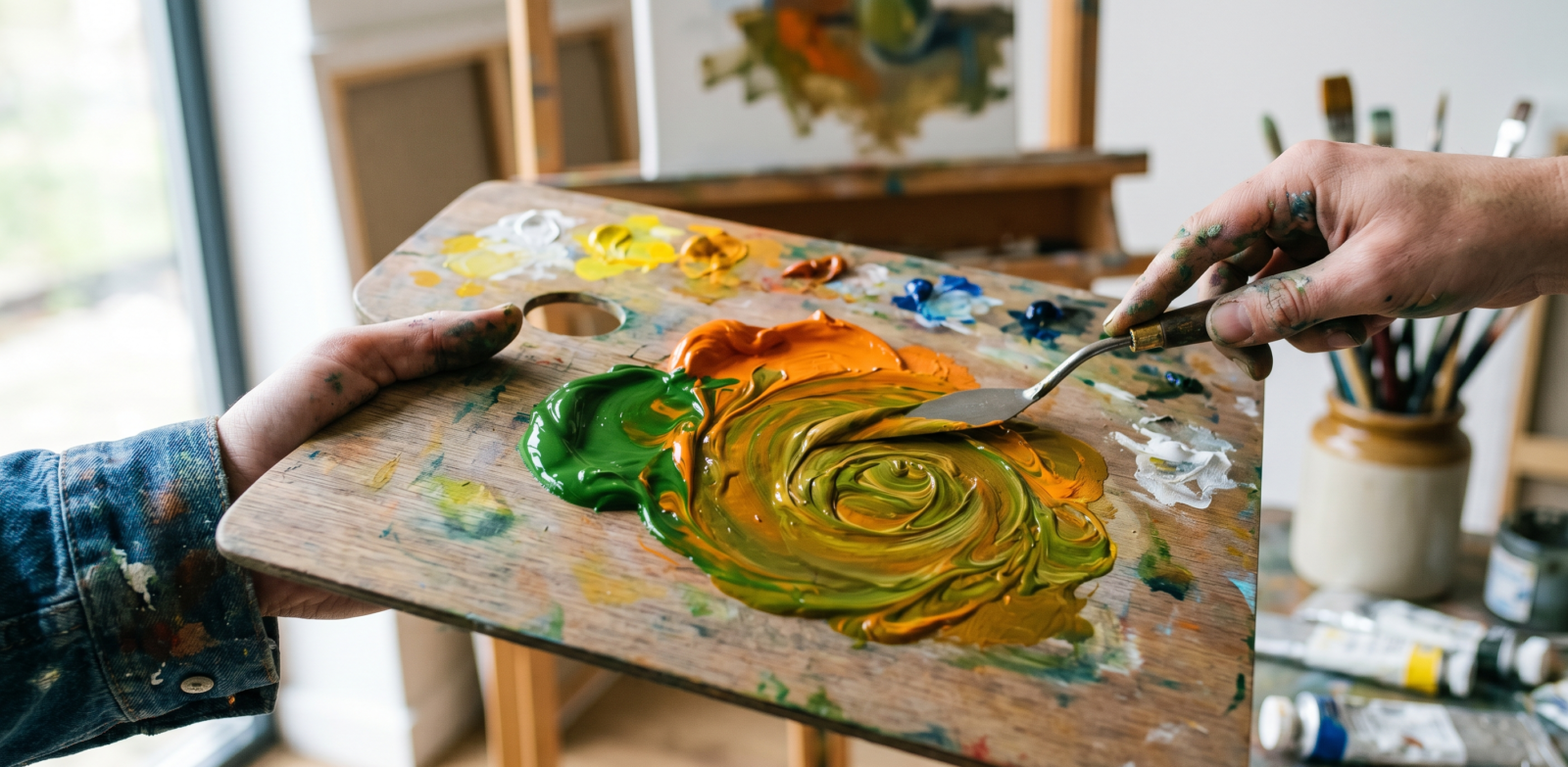
Start by placing a small dollop of green and an equal dollop of orange on your palette. Use your tool to pull a small amount of each into the center and blend them thoroughly.
- What you’ll see: A murky, warm green. This is your “base” olive.
Step 3: Adjusting the Temperature
Colours have “temperatures.”
- Want it warmer? Add a tiny bit more orange. This will push the colour toward a Citron or a “Harvest Gold.”
- Want it cooler? Add a touch more green. This deepens the Olive and makes it feel more like forest moss.
Step 4: Adding “Light and Life”
Pure green and orange can sometimes look a bit flat when mixed. To see the true character of the colour you’ve created, add a tiny drop of white. This “tints” the colour, revealing the subtle undertones. You’ll often find that your olive green suddenly looks like a high-end designer paint colour once it’s lightened slightly.
Why This Colour Combination Matters
In the world of DIY and home decor, the mix of green and orange is a secret weapon. It creates colours that are grounding.
- In Nature: This is the colour of transition. It’s the colour of a leaf turning from summer to autumn. It’s the colour of moss on a clay pot. Because it mimics nature so closely, our brains find it incredibly soothing.
- In Design: Olive and Citron are “bridge colours.” They bridge the gap between vibrant, high-energy palettes and neutral, minimalist spaces. They provide a “pop” of colour that doesn’t feel overwhelming.
Quick Reference Table: Mixing Ratios
| Target Colour | Ratio (Green : Orange) | Personality |
| Deep Olive | 2 parts Green : 1 part Orange | Sophisticated, moody, natural |
| Warm Citron | 1 part Green : 2 parts Orange | Sunny, vintage, energetic |
| Earthy Tan | 1 part Green : 1 part Orange (Add White) | Neutral, grounding, calm |
Conclusion
Many beginners are afraid of mixing secondary colours because they fear “making mud.” But in the world of art, “mud” is just another word for complex neutrals.
The next time you find yourself asking “what colour does green and orange make?”, don’t just take our word for it. Pick up a brush and experiment. Whether you’re aiming for a mossy forest floor or a vintage 70s vibe, the path through green and orange is a journey worth taking.
Happy painting!