

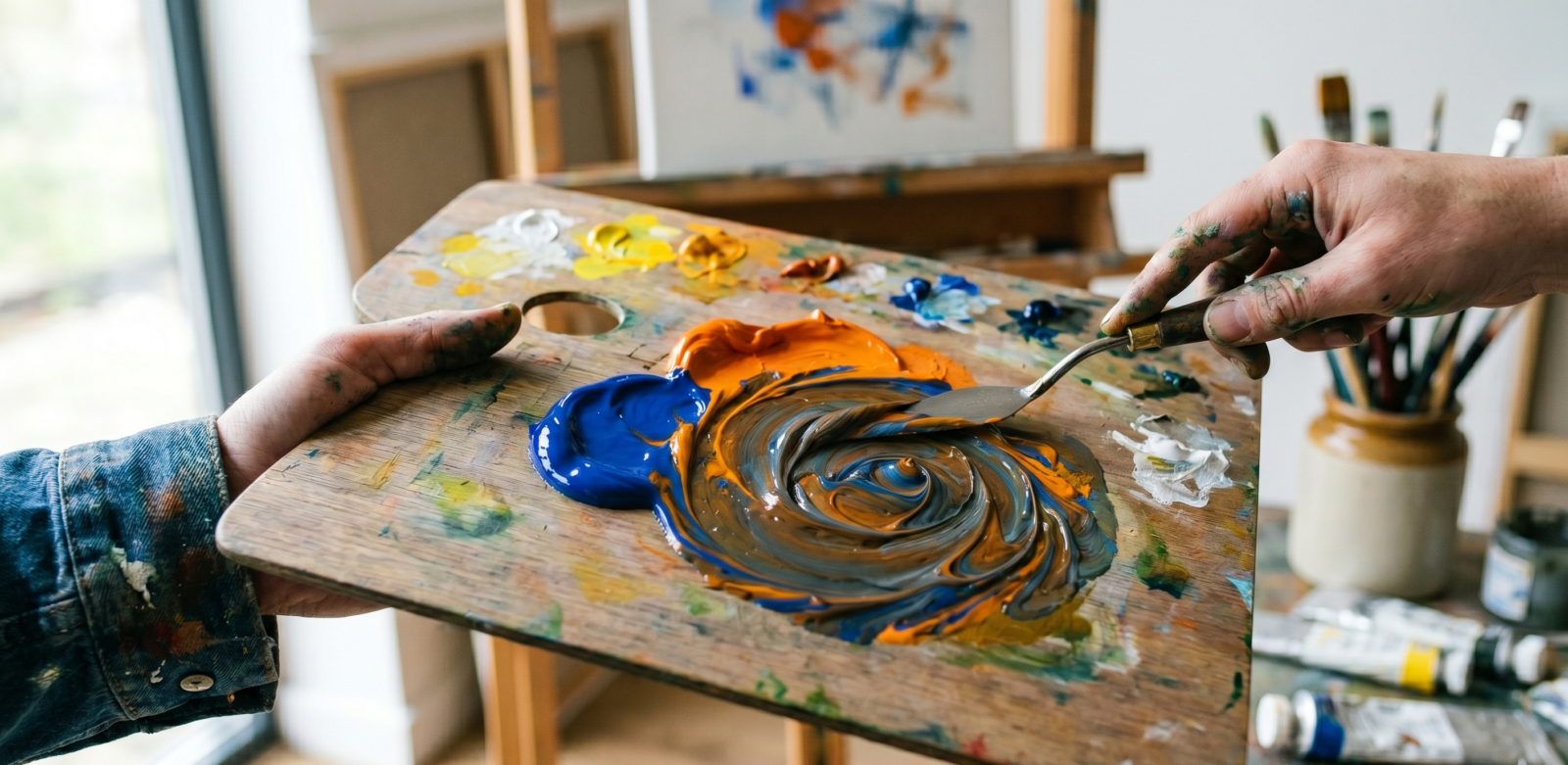
One of the most frequent questions that arises in the world of color theory is a classic: what colour does orange and blue make?
The direct answer is brown.
When you combine orange and blue in roughly equal parts, you end up with a rich, earthy neutral. Depending on the specific bias of the paints you are using, this brown can range from a warm, chocolaty tone to a cooler, stony gray.
Light vs. Paint: A Digital Twist
It is important to note a fascinating distinction here. If you are a digital creator working with light (RGB) rather than physical pigment (RYB), the rules of the universe shift.
- Subtractive Colour (Paint): Mixing orange and blue creates brown because the pigments “subtract” or soak up light.
- Additive Colour (Light): If you were to overlap a blue spotlight and an orange spotlight on a stage, they wouldn’t create a brown smudge. Instead, because they are complements, they would actually move toward white light.
For most of us working on home decor or art projects, however, we are living in the world of paint, where brown is king.
The Art of the Mix: Creating the Perfect Shade
For artists and creators, knowing the basic answer is only the first step. The true magic lies in manipulating the mix. You are rarely mixing pure, mathematical hues; instead, you are working with specific, real-world pigments like Ultramarine Blue, Cadmium Orange, or Burnt Sienna.
- Warm Browns: If you want a warmer, richer brown (resembling mahogany, rust, or terracotta), use a higher ratio of orange. The underlying red and yellow will dominate the mixture, giving it a sun-baked, vibrant feel.
- Cool Browns: If you need a cooler, darker, more shadowed brown (like dark chocolate, wet earth, or bark), let the blue overpower the orange. The blue will naturally pull the mixture toward a deep, moody tone.
- Grays and Blacks: If you mix exact complements with equal tinting strength, you can sometimes bypass brown entirely and create a beautiful, chromatic gray or even a rich, custom black. This is a favorite trick of classical painters who want to avoid the flat, unnatural look of pure black paint straight from the tube.
Why This Matters in Design and DIY
Understanding what colour does orange and blue make isn’t just for painters. If you are decorating a room, you can use this “neutralizing” effect to your advantage.
If you have a room with bright orange wood floors that feel a bit overwhelming, adding blue accents (like rugs or pillows) won’t make the room look “brown,” but it will visually balance the intensity. The two colours provide maximum contrast, making each other “pop” while simultaneously feeling harmonious to the human eye because they complete the color spectrum.
Final Thoughts
So, the next time you find yourself wondering what colour does orange and blue make, don’t be afraid of the “muddy” result. That neutral territory is where the most realistic shadows, the most comforting home textures, and the most sophisticated design palettes are born.
Whether you are painting a landscape, choosing a rug for your living room, or just satisfying a curious itch, remember that blue and orange aren’t just opposites—they are partners. They balance each other out, creating a grounded, earthy foundation that allows the rest of your colours to truly shine. Grab your brushes and start mixing; you might just find your new favorite shade in the middle of that beautiful, brown “mess.”